
COMMISSIONING NOTES
Why a metallic finish does not identify the material
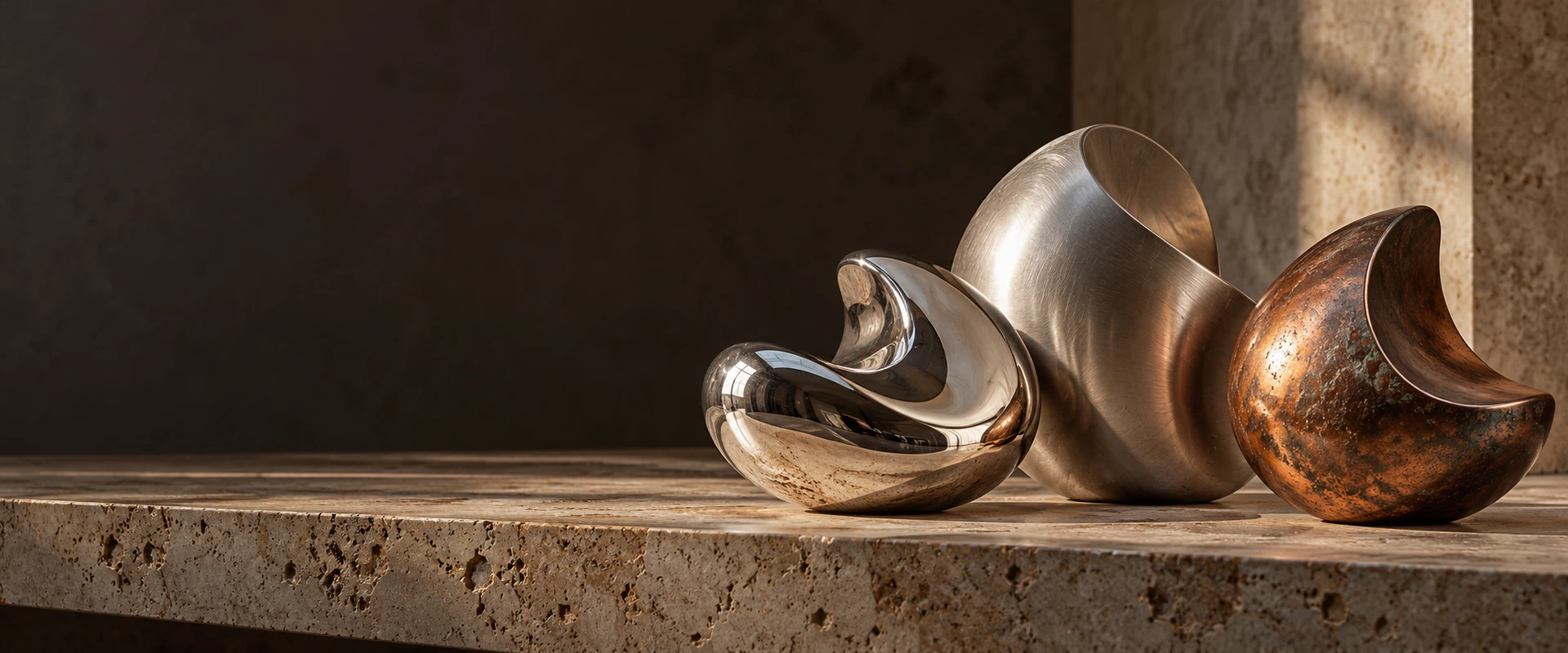
Silver, gold and reflective colour describe appearance. They do not prove stainless steel, a particular copper alloy or a metal substrate.
Silver, gold and reflective colour describe appearance. They do not prove stainless steel, a particular copper alloy or a metal substrate.
Separate three questions
When you discuss a finish with us, we work through three questions: the body material, the surface treatment and the appearance you want. A silver-coloured character and a stainless steel landscape piece can both look reflective while needing different specifications. We keep the material and finish clear in your proposal.
Discuss the making and finish together
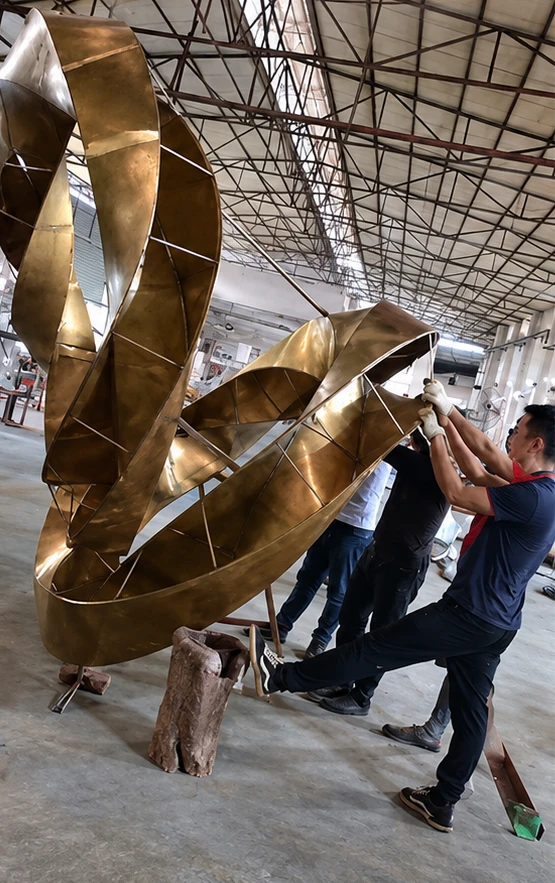
Describe the appearance you want with a reference: mirror-like, softly reflective, textured or a particular colour. We discuss the proposed making and surface treatment for the chosen form, along with any performance requirements that apply to its setting.
Agree a useful appearance reference
Choose a reference image or sample and discuss gloss, colour, texture and which surfaces are visible. Review it under lighting relevant to the installation. If the intended environment creates additional requirements, ask for a project-specific material and finish proposal, along with appropriate supporting documents.
Make comparisons on equal terms
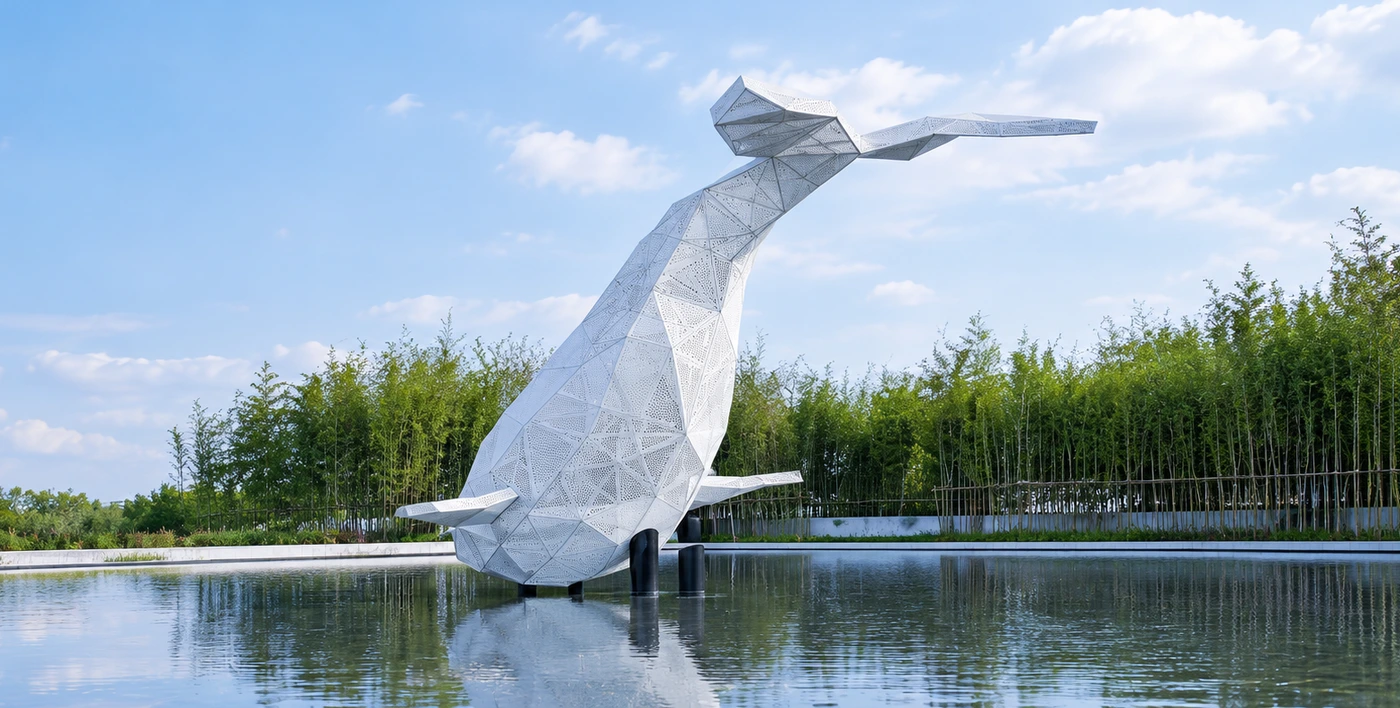
When comparing quotations, check whether both describe the same substrate, finish, scale and intended use. A colour name by itself is not enough to compare specifications. The final approved documentation should make the difference between appearance and material explicit.
Describe the finish and body material separately
Metallic finish versus metal body is a useful distinction when discussing a sculpture. A silver sculpture appearance or gold sculpture appearance describes the visible effect; the sculpture substrate specification identifies the body material. We discuss both with you so the finish and material suit the chosen design and use.
Ask three different material questions
A body material inquiry identifies what the object is made from. A surface finish inquiry describes the accepted appearance. A manufacturing process inquiry covers how the chosen form will be made. We use this material verification checklist to connect your visual goal with the alloy or material system, dimensions and construction needed for the project.
Compare samples with a written record
For sculpture appearance approval, identify the sample or image reference and the conditions relevant to viewing it. A reflective finish comparison should consider the background and light, since those affect the visible result. A sculpture finish specification should also state which object and surface it applies to. A material and finish quotation becomes easier to assess when the substrate, surface direction and unresolved technical requirements are visible. Do not write a specification by guessing a process from shine or colour.
Bring this to your project brief
- The exact artwork or model reference.
- Dimensions with units, body/base distinction and intended setting.
- The questions still requiring material, scope or site confirmation.
QUESTIONS & ANSWERS
A clearer
next decision.
Questions about Why a metallic finish does not identify the material.
Discuss your requirements ↗How do we confirm the material of a silver-coloured sculpture?
Silver describes the appearance. We confirm the body material and finish separately for your chosen piece, including the grade where relevant.
Does a gold surface mean the sculpture contains gold?
No such conclusion follows from colour. Ask for the proposed substrate and finish system; do not infer metal content or surface treatment from the photograph.
How do we agree the manufacturing process for a sculpture?
Share the design, dimensions and details that matter to you. We discuss the proposed making method and approval stages alongside the material and finish for your artwork.
How should material and finish be recorded in an RFQ?
List body material, desired surface appearance and any technical requirements separately. Mark unknown values for review rather than inventing a complete material specification.
Why can a reflective sample look different in another room?
The reflected surroundings and lighting influence its visible appearance. Agree a reference under representative conditions and record the accepted appearance for the specific object.
Does a material category page replace a project specification?
No. It helps explore references and questions. The actual material, construction, finish and responsibilities need an approved project-specific record.
EVERY PROJECT STARTS WITH A CONVERSATION
What do you have in mind?
A sketch, a reference or an early idea. Tell us about the space.
Start your project