Landscape & Public Art
Outdoor Sculpture Site Planning: Base, Exposure and Care
A site-planning guide for landscape and public-space artwork, with a responsibility matrix and a current public-art context from Frieze Sculpture 2026.
TL;DR / THE DIRECT ANSWER
The decision, in brief.
- Prepare a site brief before selecting the final material, base and installation scope.
- Separate the artwork, fixing interface and site foundation; name the party responsible for each.
- Plan inspection and care access from the beginning, including water, deposits, public contact and future landscape changes.
Outdoor sculpture site planning begins with the place: the approach, ground conditions, surrounding activity and exposure. For landscape designers and project buyers, a finished-view rendering is only one part of the brief. The artwork also needs a coordinated relationship with the base, destination works and future care.
We use your site information to discuss the intended form and making scope. This guide helps you assemble that information and route the right questions to the responsible specialists. It does not prescribe an anchor, foundation or material grade from a photograph.
Use current public-art examples to ask better site questions
Frieze Sculpture 2026 is running in The Regent’s Park from 16 September to 1 November, with work by 11 international artists. The official programme places varied sculptural ideas within an existing landscape. That is useful visual context for a buyer: the relationship with the setting is part of how an artwork is experienced.
An exhibition is not evidence that one construction or maintenance approach suits another site. When building a landscape artwork approval brief, use examples to discuss viewpoint, route, silhouette and context. Then document the conditions of your own location rather than importing dimensions or technical assumptions from an unrelated installation.
Reference: Frieze
Create a public art site review record
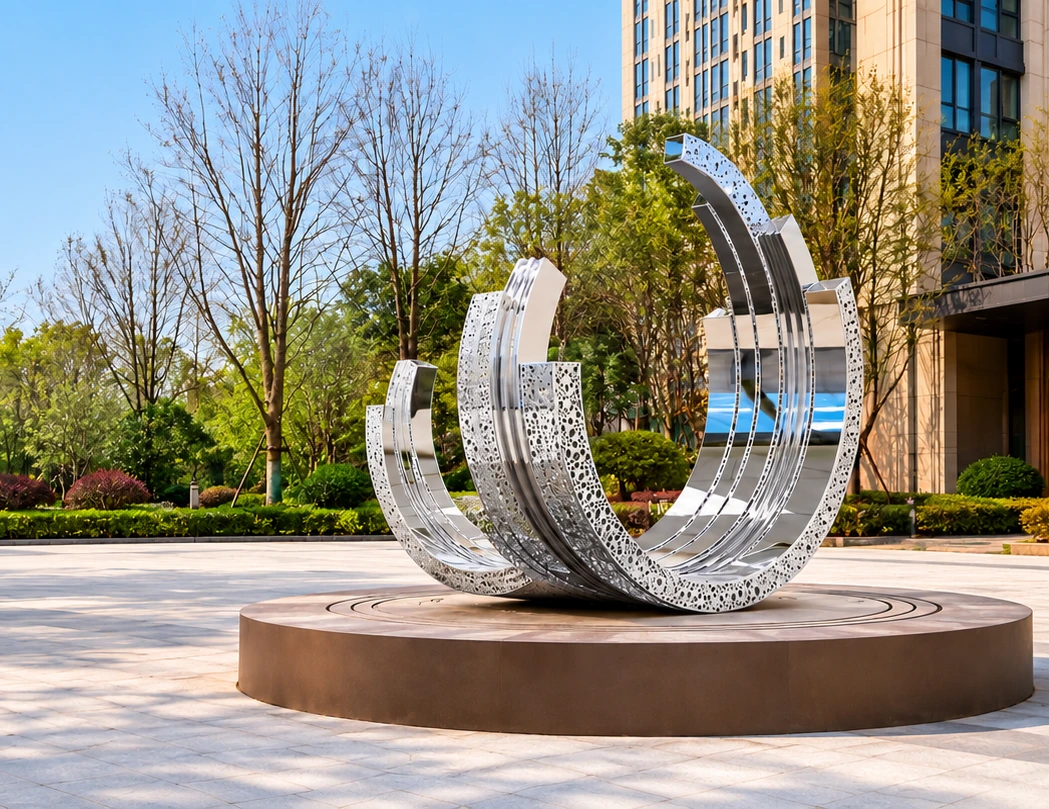
Start with an annotated plan, photographs from the approach and the intended orientation. Identify the available footprint, nearby paths, planting, water features, buildings and services. Tell us whether the work is a distant landmark, an arrival focus or an object people can approach closely.
Add known exposure conditions: prevailing weather, irrigation, coastal or road-salt influence where relevant, places that remain wet and the cleaning regime used around the artwork. Identify planned landscape changes as well. A future hedge, new light or altered irrigation pattern can change access and the way the surface is experienced.
| Information | Why record it | Responsible review |
|---|---|---|
| Plan, orientation and views | Align silhouette with the intended approach | Client, landscape and artwork design team |
| Site/base survey and utilities | Identify foundation and installation interfaces | Responsible site designer and contractors |
| Wind, exposure and public contact | Inform the technical and material proposal | Responsible engineer and fabricator |
| Water and cleaning conditions | Inform surface selection and care access | Landscape, facilities and artwork team |
| Receiving and lifting route | Coordinate packed units and placement | Destination installer and logistics provider |
| Future inspection access | Keep the work maintainable after landscaping | Owner and facilities team |
Separate the sculpture base from the site foundation
Record what belongs to the artwork package and what belongs to the destination works. The visible pedestal, fixing plate, anchors, concealed supports and foundation are different elements even when a rendering shows only one simple base. Each interface needs agreed information and a responsible party.
A landscape sculpture base interface should connect the approved artwork proposal with site-specific technical design. Ask for the drawings and checks required by your project team; do not infer capacity from the apparent size of a plinth. The Canadian Conservation Institute’s discussion of physical forces provides useful background on support and restraint, while actual site loads and attachments require the responsible designer’s review.
Reference: Canadian Conservation Institute
Match the proposed material system to the exposure brief
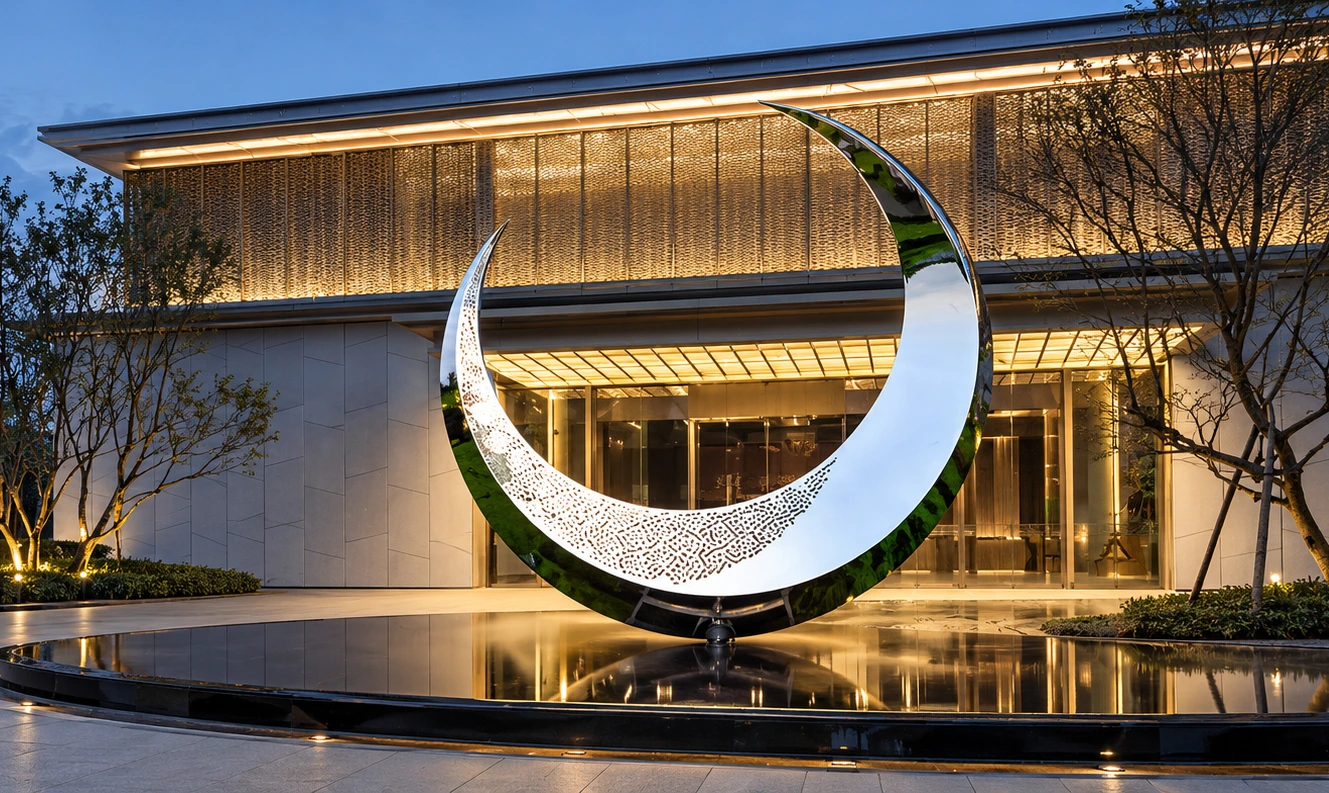
Describe the required appearance separately from the body material. A reflective surface, a painted character and a patinated form bring different surface questions. Ask the supplier to identify the body, finish, assembly details and proposed care instructions for this location.
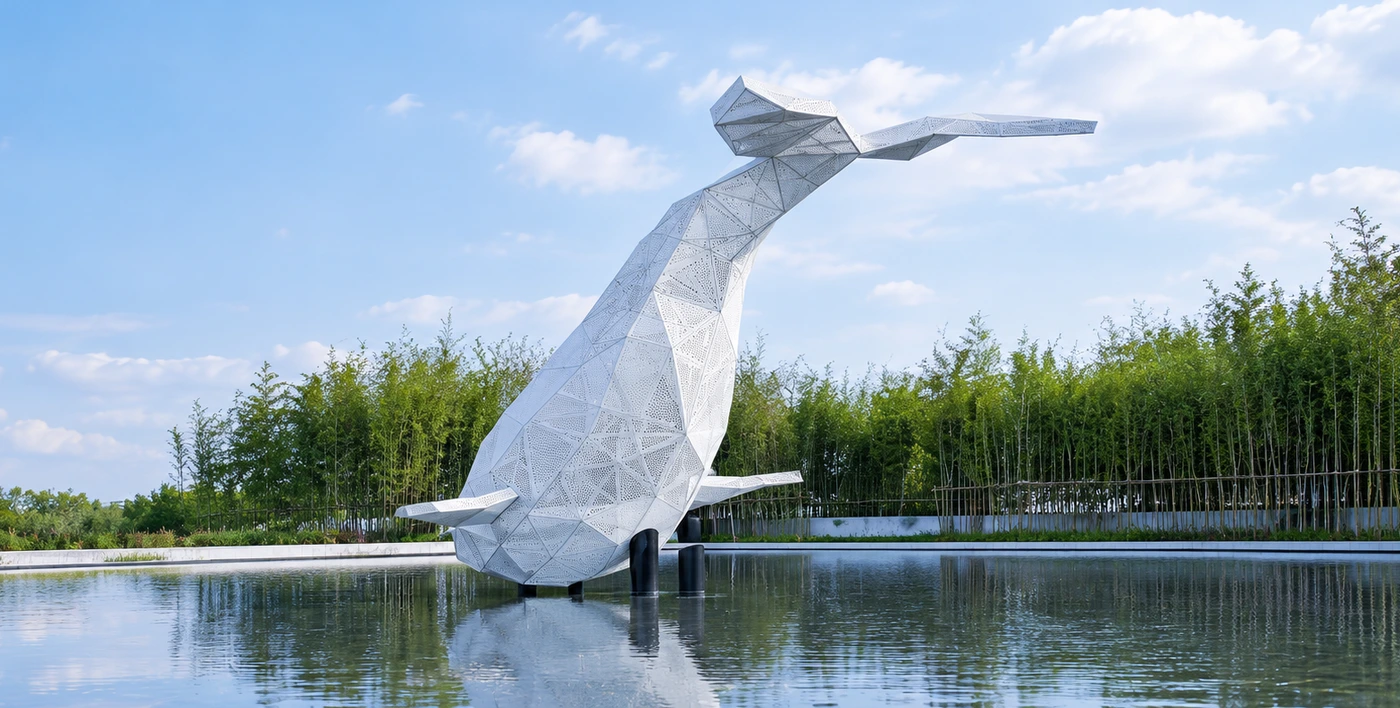
The material category is a starting point, not a complete performance statement. Include connections and any mixed-material interfaces in the technical discussion. If the artwork is near water, establish who coordinates the sculpture, water system, surrounding finishes and access for cleaning so the responsibilities do not disappear between packages.
Write an outdoor sculpture care plan before handover
Name the owner who will inspect the artwork and keep the records. Agree what observations should trigger a specialist review: movement, loose components, changes at joints, finish damage or unusual deposits. Retain baseline photographs and the approved material and surface description so a later concern can be compared with the handover condition.
Make maintenance physically possible. Show how staff will approach the piece without damaging planting or the surface, and how equipment reaches elevated areas where relevant. Avoid a care plan that depends on an access route the final landscape design removes. Review instructions for the selected finish rather than applying a generic household cleaning method.
Release the artwork and the site interfaces together
Before the next fabrication or site-work stage, review the open decisions in one meeting. Confirm the artwork revision, overall envelope, base interface, destination responsibilities and required approvals. Record which details are final and which remain conditional, with an owner for each condition.
Watford’s commissioning toolkit gives site appraisal and decision responsibilities a place within the brief. Apply that discipline to your project: share the site record and selected form with us, then coordinate the artwork proposal with the people responsible for the ground, structure and operation of the finished space.
Reference: Watford Borough Council
VISUAL COMPARISON
Two landscape relationships to consider
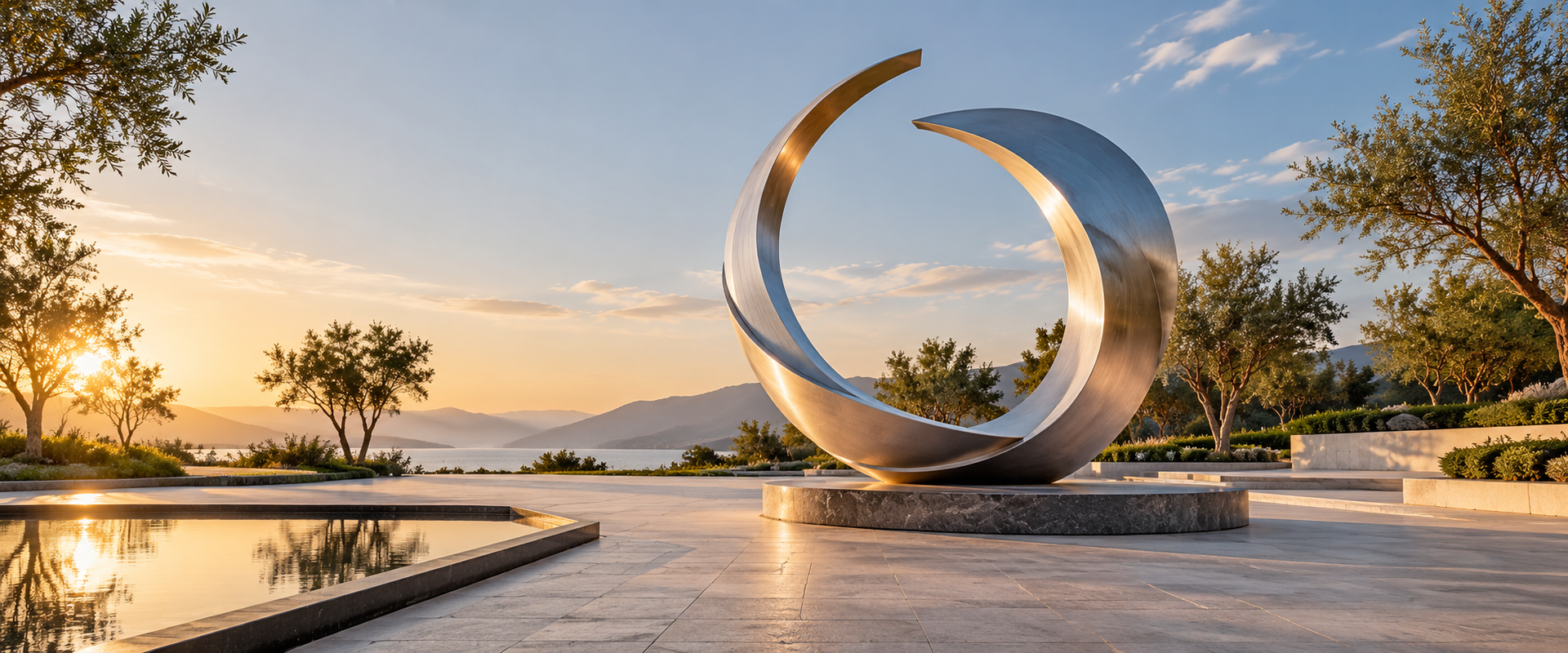
Artwork framing a view
Artwork within a water setting
THE DECISION FLOW
Outdoor artwork planning sequence
- 01
Record the site
Collect plan, views, exposure and operating conditions.
- 02
Define the interfaces
Separate sculpture, base, foundation and landscape services.
- 03
Coordinate approvals
Resolve the proposal with the responsible site specialists.
- 04
Prepare care & handover
Confirm access, inspection ownership and baseline records.
TAKE THIS TO YOUR PROJECT MEETING
Your project checklist.
- Record approach, orientation and future landscape changes.
- Describe exposure and nearby water/irrigation.
- Assign artwork, base, anchors and foundation responsibilities.
- Coordinate site-specific technical review before release.
- Verify packed receiving and placement access.
- Keep inspection and care access in the final landscape plan.
Print this guide or save it as a PDF to keep the checklist with your brief.
FROM OUR DESIGN & MAKING TEAM
XGC Sculpture Editorial Team
We write about the decisions behind sculpture design, making and installation. Our guides bring material, spatial and commissioning questions into a practical brief you can discuss with our team.
We link external technical and regulatory references to their original publishers. Project-specific engineering, permissions and site approvals remain with the responsible specialists.
Explore our workshopSources & further reading.
External references checked on Oct 20, 2026. Read each source in its stated context.
- Frieze Sculpture 2026 Frieze
Official exhibition programme: 16 September–1 November 2026 in The Regent’s Park. No affiliation with XGC Sculpture is implied.
- Agents of deterioration: Physical forces Canadian Conservation Institute
General guidance about forces, support, handling and restraint; not a structural calculation.
- Public Art Commissioning Toolkit 2025 Watford Borough Council
Commissioning framework, scope, site appraisal and decision responsibilities; local public-art guidance, not a universal contract.